
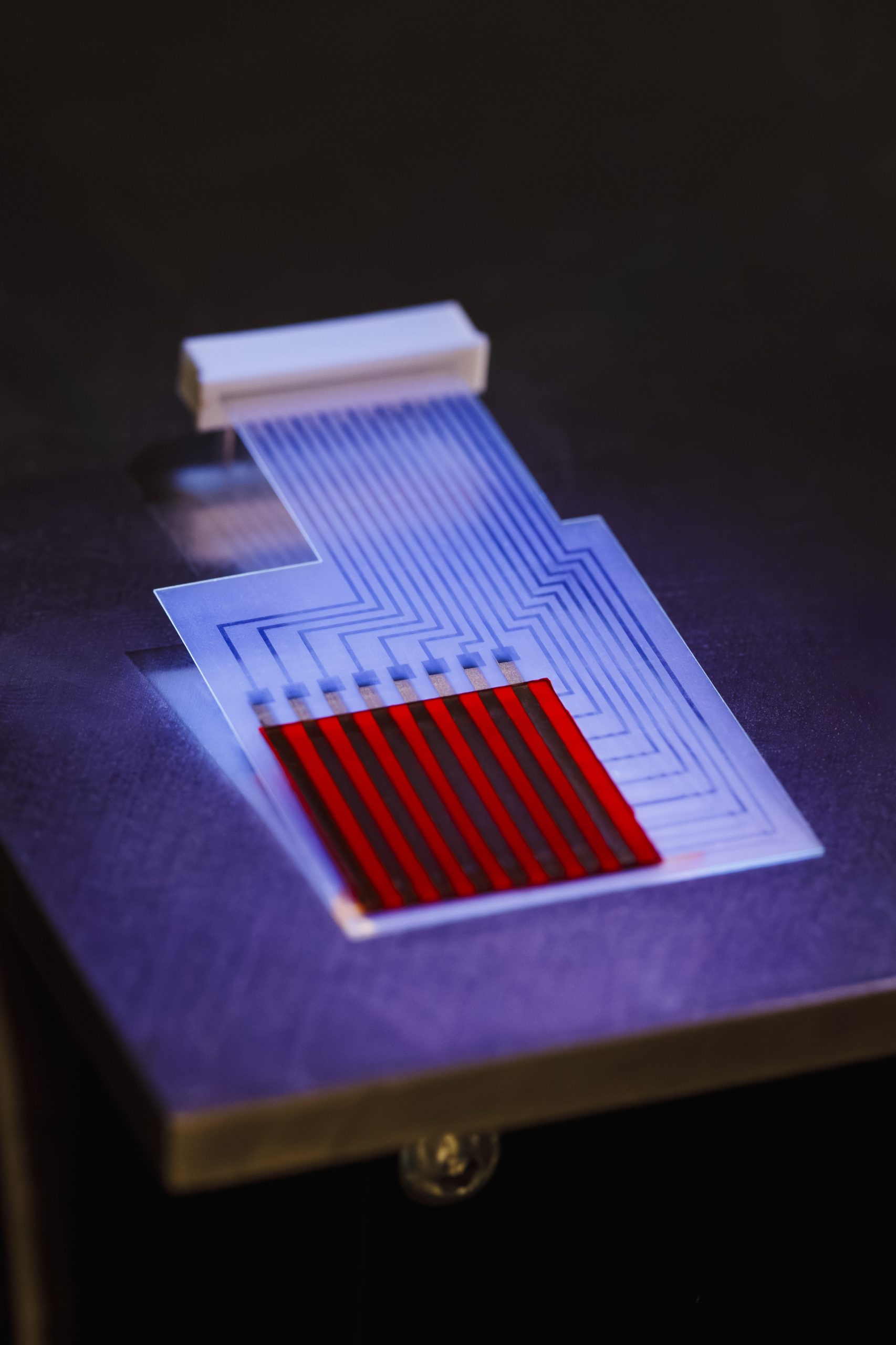
LIVERMORE, Calif. — A new wearable patch to help protect cancer patients and American warfighters from harmful radiation has been developed by a small team of Sandia National Laboratories researchers. The disposable sensor is designed to be worn on the skin or clothes and produced at scale.
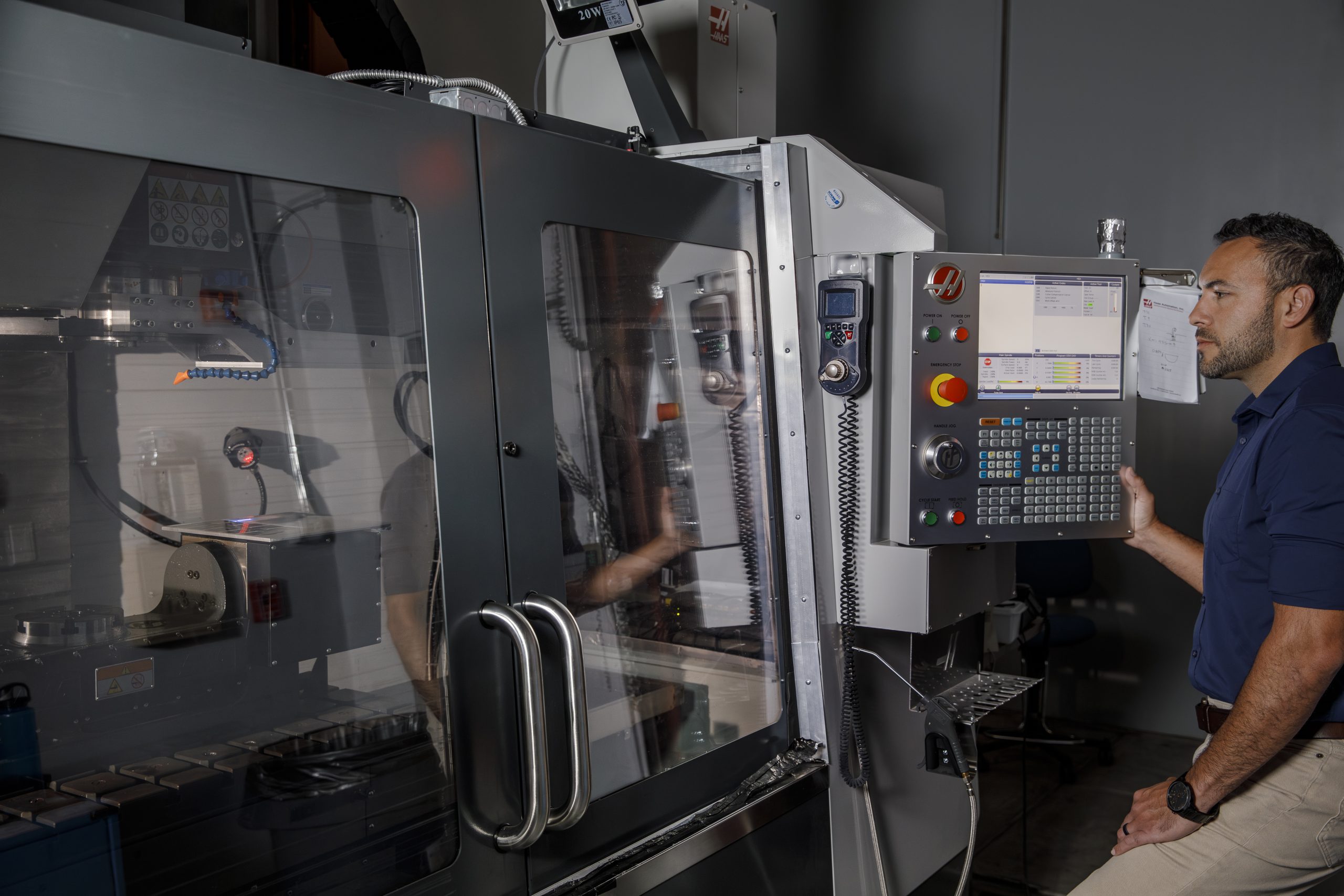
Sandia researchers Patrick Doty and Isaac Aviña developed the wearable dosimeter that could change the way radiation therapy is administered by providing real-time feedback on radiation delivery and improving treatment accuracy. Combining advanced light-sensing polymers and microelectronic grids, the team used a state-of-the-art in-house developed laser etching machine at Sandia’s California site to create thousands of disposable patches.
“Right now, in the medical world, we aim beams at cancerous cells with a wide range of error,” Aviña said. “That means sometimes we leave large parts of cancerous cells and other times we hit healthy tissue. To fix this problem, we need better accuracy.”
This need is particularly acute for children. A 2022 National Institutes of Health study found that it is difficult to ensure radiation goes only where it is needed and that “children are particularly susceptible to late adverse effects of radiation.”
“They know exactly what the beam current is and what the energy is, so they know exactly where it’s going in XY space and where it’s going to stop in a tank of water,” Doty said. “But what they don’t know is where the patient is. They might breathe or move.”
The new dosimeter not only measures radiation dose but can also alert clinicians if the radiation is off target. The patch includes a polymer that interacts with radiation in real time, allowing it to track both the location and dosage of radiation as it passes through the patient. If the patient moves, the system can react instantly, shutting off the beam to help prevent harm to healthy tissue.
The technology is licensed to Virginia company WearableDose Inc., which earned top global Innovation of the Year honors at the MedTech World Awards in November 2025.
The research team is now receiving funding from the Defense Threat Reduction Agency to explore how the patches can enhance situational awareness and monitor exposure for military personnel in hazardous environments. This work translates to improving military readiness and long-term health outcomes for today’s warfighters.
As the team continues to refine their technology, they remain motivated by personal experiences with cancer and the desire to improve patient care.
“Everybody should want to do something about this,” Doty said.