
LIVERMORE, Calif. — From finding patterns in complex data to improving scientific simulations and understanding how liquids trap gases, three Sandia National Laboratories researchers are pursuing different challenges with a common motivation: curiosity.
Tommie Catanach, Paul Kuberry and Jessica Rimsza are among 67 scientists nationwide selected for the Department of Energy Office of Science 2026 Early Career Research Program, which supports promising researchers early in their independent careers.
Established in 2010 by the DOE Office of Science, the program provides approximately $2.75 million over five years to selected national laboratory researchers.
Tommie Catanach: Navigating the geometry of uncertainty
Tommie Catanach’s professional focus is Bayesian statistics, a philosophy and mathematical framework for reasoning with probabilities.
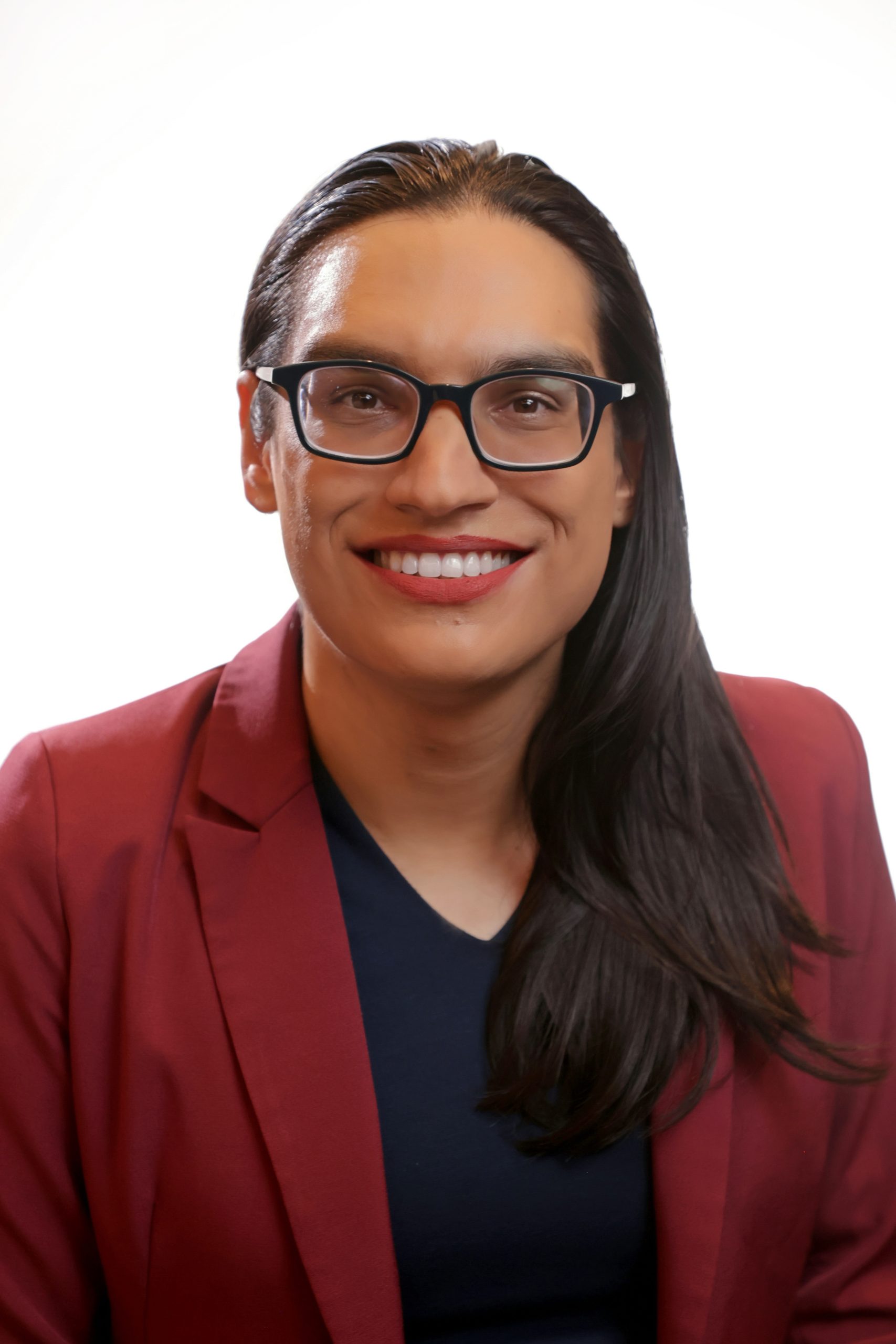
“Bayesian thinking is a way of reasoning with probability distributions,” she explained. “People express their beliefs using probability distributions and update those distributions as information becomes available.”
Catanach’s research tackles the challenge of scalable and reliable Bayesian inference for complex inverse problems. She likens it to “searching for needles in a haystack.” In these problems, “only a few models from a huge set fit the data,” and those models might be “very different from each other.” Finding all the plausible explanations becomes particularly challenging when they aren’t near each other.
Her journey began in astrophysics during undergraduate summer research fellowships, where she found herself drawn more to data analysis than to the physics itself. Based on these experiences, she decided to pursue a PhD focused on data analysis and modeling.
Her graduate studies in applied math and computing then exposed her to Bayesian probability.
“I just really liked that it combines both practical things, like analyzing data and working with engineering models, with some really rigorous philosophy about how to think about probability and what it means to learn,” she explained.
She finds her passion in the space between abstract theory and practical problem solving.
“I really like how I can start with some very basic theoretical notion of how to learn and reason properly and then build on top of that and add complexity,” she said. “If I get bored or stuck with one level, I switch to something more practical or theoretical. I’m always excited by new things I’m working on.” Catanach hopes to further explore the relationship between Bayesian theory and modern machine learning, including how probabilistic reasoning could improve super intelligence (also known as artificial intelligence) models.
Office of Science Advanced Scientific Computing Research Program is funding her work in this area for the next five years, which Catanach says offers an opportunity to pursue those questions through a sustained research effort.
“Understanding how Bayesian thinking can improve models, and how to approach a Bayesian theory of modern machine learning is a really open question.”
Paul Kuberry: Bridging physics with mathematics and computing
Paul Kuberry was also selected by the Office of Science ASCR for his work specializing in multiphysics coupling, the art of making different physics simulations work together efficiently.
His work on Surrogate-Accelerated Interface Transfer Operators, or SAITOs, seeks to improve how efficiently and reliably different physics simulations communicate.

In multiphysics simulations, different models often need to work together. One example is fluid–structure interaction, such as blood flow through arteries, where one model describes the fluid and another describes the structure it interacts with. Traditional coupling methods often require repeated back-and-forth exchanges between models, which can be slow and difficult to keep stable.
Kuberry was first drawn to the field because it brings together several of his interests: creative intuition, rigorous mathematics, software engineering and high-performance computing.
“SAITOs capture that exchange in a more efficient and stable way, reducing communication while keeping the simulation accurate,” he explained.
Solving challenging problems with practical methods is something of a passion for Kuberry.
“I enjoy digging into a problem, identifying a key insight and using it to develop a better approach,” he said. “Seeing that approach adopted and used by others is especially rewarding.”
He described his selection for the Early Career Award as an honor that reinforces his commitment to advancing computational modeling and simulation.
Looking ahead, Kuberry wants to investigate how data-driven methods can be made more dependable. Models trained on data can perform well under familiar conditions but become less accurate when applied to situations outside their training experience.
An important goal is finding ways to ensure that these methods remain stable even when their accuracy declines.
Jessica Rimsza: Unlocking the secrets of porous liquids
Jessica Rimsza is a computational materials scientist fascinated by the fundamental interactions that govern material behavior at small scales.
“What first got me interested in my field was my fascination with understanding the fundamental small-scale interactions that drive material behavior,” she said. “I’ve always been intrigued by how surfaces, despite being just a tiny part of a material, can have an outsized impact on its overall properties.”
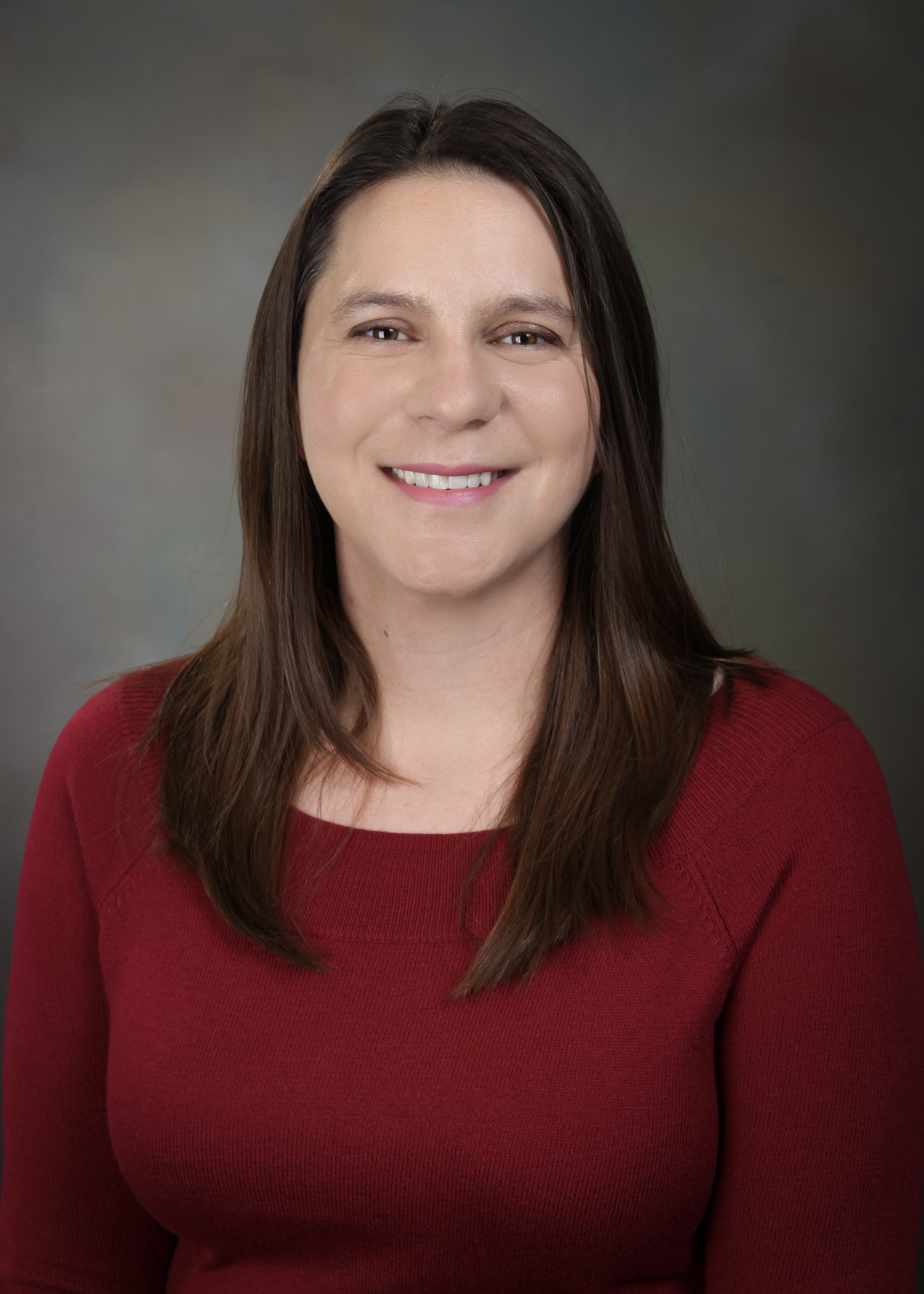
Rimsza’s research focuses on porous liquids, which contain particles with extremely small openings called nanopores. These pores can trap gas molecules, potentially allowing the liquids to separate gases more efficiently.
“The liquid around these particles usually can’t get inside the holes because of how the particles and liquid interact, making extra space for the gases in the liquid,” she explained. “But my recent work shows that sometimes the liquid can sneak into these holes a little bit, and this changes how well the liquid traps gases.”
Understanding when and why that happens is central to her research. She is investigating how liquids move into nanopores, how the surfaces of the particles influence those interactions, and how gases behave within these complex materials.
The findings could help researchers better predict how porous liquids will perform, and guide the development of industrial gas separation processes.
Rimsza’s enthusiasm for materials science was born from trying to explain the unexpected.
“I believe my passion and curiosity come from my drive to understand the odd results, unusual or unexpected outcomes that can seem spurious but ultimately can tie you back to the complex dynamic mechanisms in separation systems,” she said.
Office of Science Basic Energy Sciences Program is now supporting the next phase of her work, in which she hopes to focus on “developing more efficient ways to discover new separation mechanisms based on disordered pore structures that occur in natural systems.”